
An analysis of the Trial System in ARC Raiders (and other incentives in game development)
Below the video is a written version.
141000, 9600, 16000, 105000, 76000.
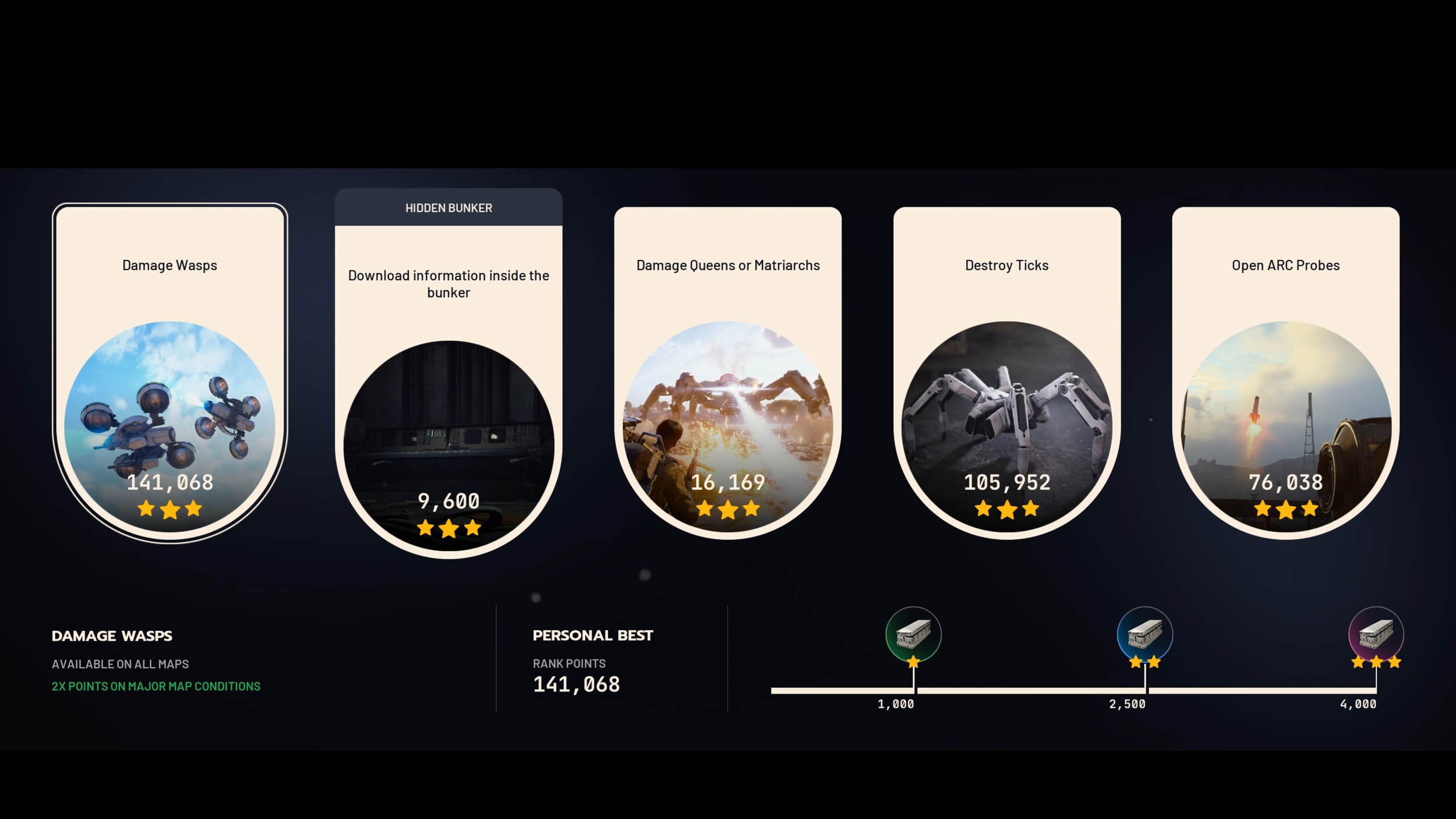
My scores for the last week of trials
These are the scores of my trials last week. To some of you, these may seem impossibly high. Yet, no cheating was involved. Instead, I had to ruin the experience of other players to achieve these scores. And that requires understanding the game design of the trials in ARC Raiders. Streamers like Shroud and CohhCarnage have also said that they think the design of the trials needs a reworking, and have stopped trying to do the trials because of the issues they saw. But, why are they saying that? This made me incredibly curious, so I went to take a look.
Let’s go over the basics. If you have played ARC Raiders, you can skip to the ‘Game mechanics’ section below.
You do the trials to get this skin, and for the bragging rights of being the cantina legend rank, which to be fair not a lot of folks care about, especially because the skin does not look as grand as other skins:
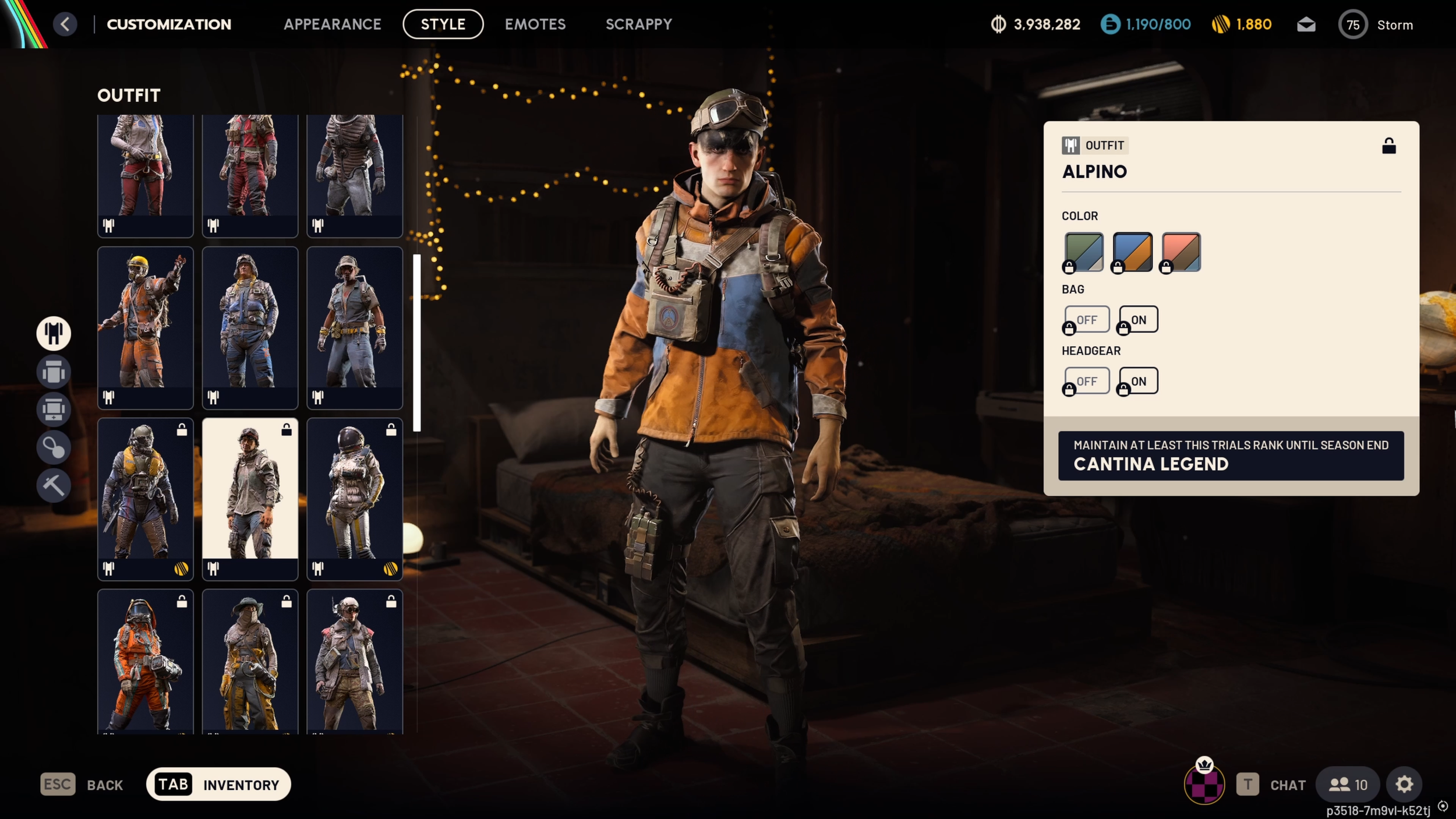
The Alpino skin in ARC Raiders, in the blue and orange variant reserved for Cantina Legend ranks only
I wish it had sunglasses! But the main fun is to get high numbers, play with others, and get an exclusive unlock, as is the case with many videogames. If you are cantina legend you get this skin only if you maintain the rank at the end of the season, so you have to keep playing the whole way through.
Every week there are 5 trials that everyone can do. Let’s take an example trial, the Open ARC Probes trial. What does opening mean? It means searching it, seeing the inventory, and a little pop-up on the left shows XP for opening it.
This does not mean actually looting any items. You only have to see the probe inventory screen, and can immediately leave. Many folks do this trial exactly that way. So you run around the map, opening them, but not looting any items.
This action gives you a score, and this score is shared between all of your squad members. Initially you can get 3 stars at 4000 points, which gives you some nice items. But, to get a max score, and rank up in the leaderboards you have to do this as a trio. Because every person in your trio who opens up a probe gives that score to everyone else in the squad.
These scores are then tallied onto leaderboards for each rank, and you need to shoot for the maximum amount of points to rank up the most, as each trial season is only a few months long, so you have to be high up in the scoreboards to rank up either one rank, two ranks, or even three ranks. You only rank up at the end of each week, so every single week you have to get good scores. And, only the highest score you get for each trial counts towards the final total, so you have to truly get the max score possible to get a chance on the high rank leaderboards.
The game mechanics
This is where we get to the game mechanics. Each map, or lobby as folks call it, lasts 30 minutes. So there is a 30 minute max time to do a trial, and only the score you get in one particular lobby counts towards your points.
But, you can randomly spawn into the lobby during those 30 minutes. You could spawn in at 25:00 minutes remaining, at 20:00 minutes remaining, or even at just 17 minutes remaining. So for a good trial run you have to get lucky and hope that you join the lobby at the very start, with the timer reading 29 minutes or more. Anything less, and it’s too late for you to cross the entire map in case the trial objectives are far apart, and you cannot get a max score anymore.
And, did you also spawn in at a good location? Each map has many locations for spawns, so if for example you are doing a particular trial like damaging ground enemies, you want to spawn as close as possible to the location of those ground enemies, so you can damage as many as possible. If you don’t spawn close enough, you have to reset and leave immediately, creating an emptier lobby for everyone else, and a very boring time for yourself.
And, the exit locations, such as elevators, are also random, and have timers! If you want to get max points, you want to use all 30 minutes, which means only one exit will be active all the way at the end. If your objective, such as leapers, respawns in the south part of a map, and the last exit is the north one, you cannot get maximum points.
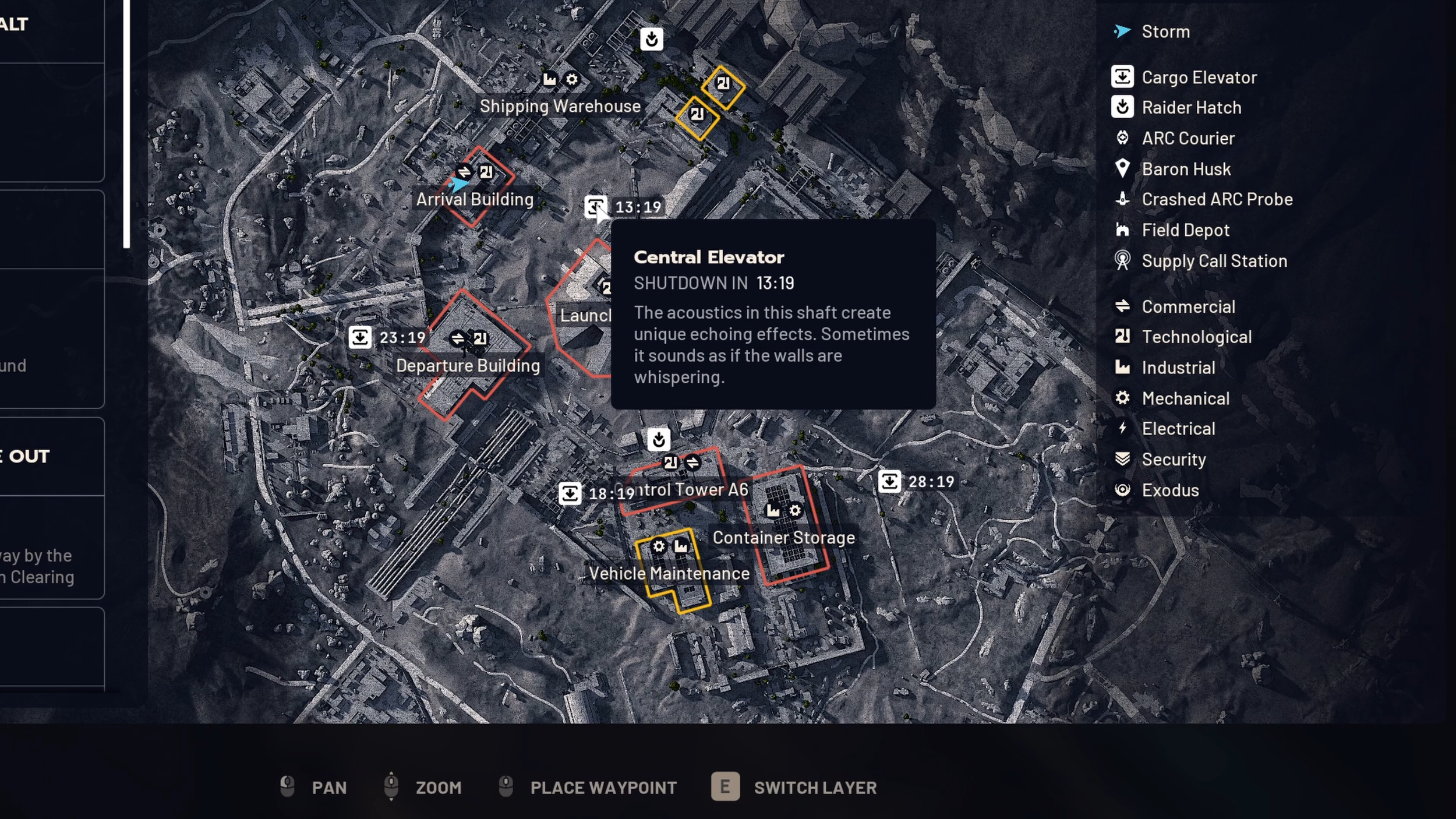
An example of a countdown on an exit elevator.
And, there are also random weather conditions! It can be raining, or foggy, which makes it hard to see some objectives. The sunny weather is usually best. If not, you have to immediately reset.
And, the trial objectives are all over the map, so you have to split up as a team and divide up the map to be able to get all the probes. But, if you are split up as a trio, you may just die very easily as other trio teams, or big ARC enemies, will run into you while you are running around alone.
And, you have to actually survive the map, and escape through an exit, for the points to count. If you die, the points are invalidated. So you want everyone in your team to survive. But, to get a max score, you have to split up. So, you have to hope you get no PvPers in your lobby that shoot you.
But wait, there’s more!
You can affect whether you are in a PvP lobby or not, to a degree. The fastest way to lower your PvP risk is to join matches and instantly surrender, ending your match. This makes the system think you are very friendly, as you did not shoot anyone during that ‘match’, and it then places you in friendlier lobbies. Which creates a boring time for you to repeat that 6 times to lower yourself down to very friendly lobbies, and a boring time for other players who now have to play in an empty lobby where they rarely see anyone, because others keep surrendering to lower their PvP risk. You sometimes even bump into the bodies of others who have done exactly the same surrendering. So regular players sometimes find empty lobbies with just dead bodies.
Then, once you’re in a friendly lobby, you have to make sure others won’t do the objectives that you need to do, so you have to clear the lobby of other players. You have to immediately kill everyone else, and it feels awful! These players are genuinely surprised they get killed for no reason, because they really are friendly and the system has correctly placed them in friendly lobbies. And, you only have one shot at that lobby clearing, because afterwards you have to remove your heat to get into friendly lobbies, and so again you have to surrender 6 times. It’s awful for you, and awful for them!
The same thing has happened in other games, like Call of Duty, where you would sometimes get battle pass missions to get ‘assists’, which would mean hurting an enemy, but not killing them. Which incentivized gameplay of not helping your team by killing enemies, but only damaging them, running away, and hoping someone else would deal the killing blow, so you could get an assist.. That incentives ruins the experience of others.
But wait, there’s more!
The spawns for trial objectives are also in random locations. Sometimes the atrium location on Stella Montis has fireballs, sometimes the atrium has Shredders. Depending on which one you find, one trial may be better to do than another, so you have to reset.
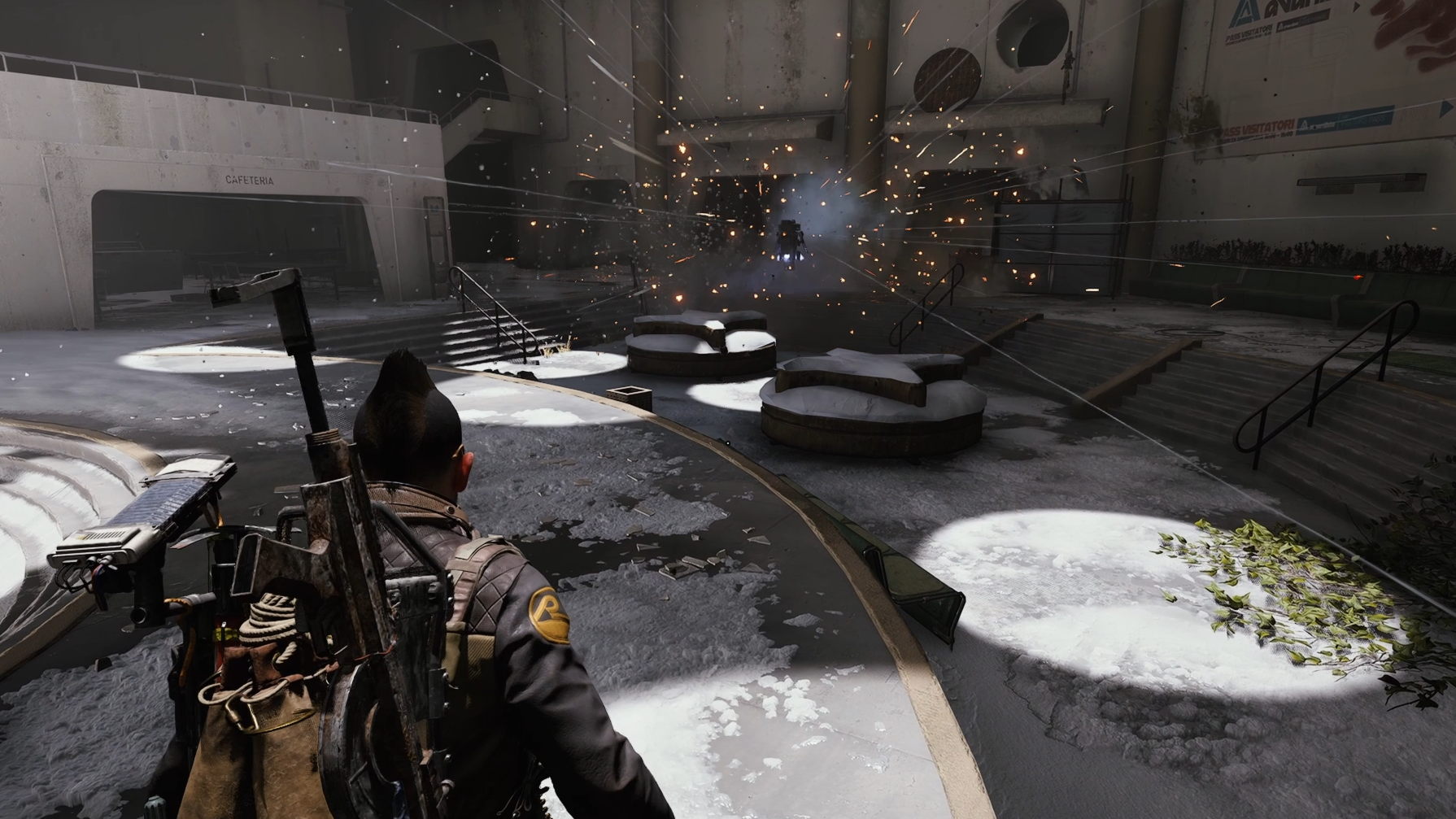
A shredder attacking in the Atrium location of Stella Montis
But wait, there’s more!
You get double score on certain map conditions, like night time, cold snap, and electromagnetic storm. So for a max score, and to rank up, you have to do these trials on those map conditions. For the Probes trial the electromagnetic storm event is a requirement for a max score, as that event spawns way more probes on the map.
And, not every map has the same amount of probe spawns for the electromagnetic storm. The spaceport map has the most probes by far, so for a max score you also have to make sure the electromagnetic storm is on the spaceport map.
Also, the map conditions have timers on them. They only happen at certain times of the day, and only last for an hour. So you have to be online playing the game during the exact time that condition is active. For example, to play the electrostorm spaceport map for the probes trial, I have to be awake at 10 o’clock in the morning here in Amsterdam. Sometimes this event only happens once a day, and always at that time, for a whole week.
And these timers can be found in-game, but only for the next events. All other timers can only be found on third party websites, of which there are multiple.
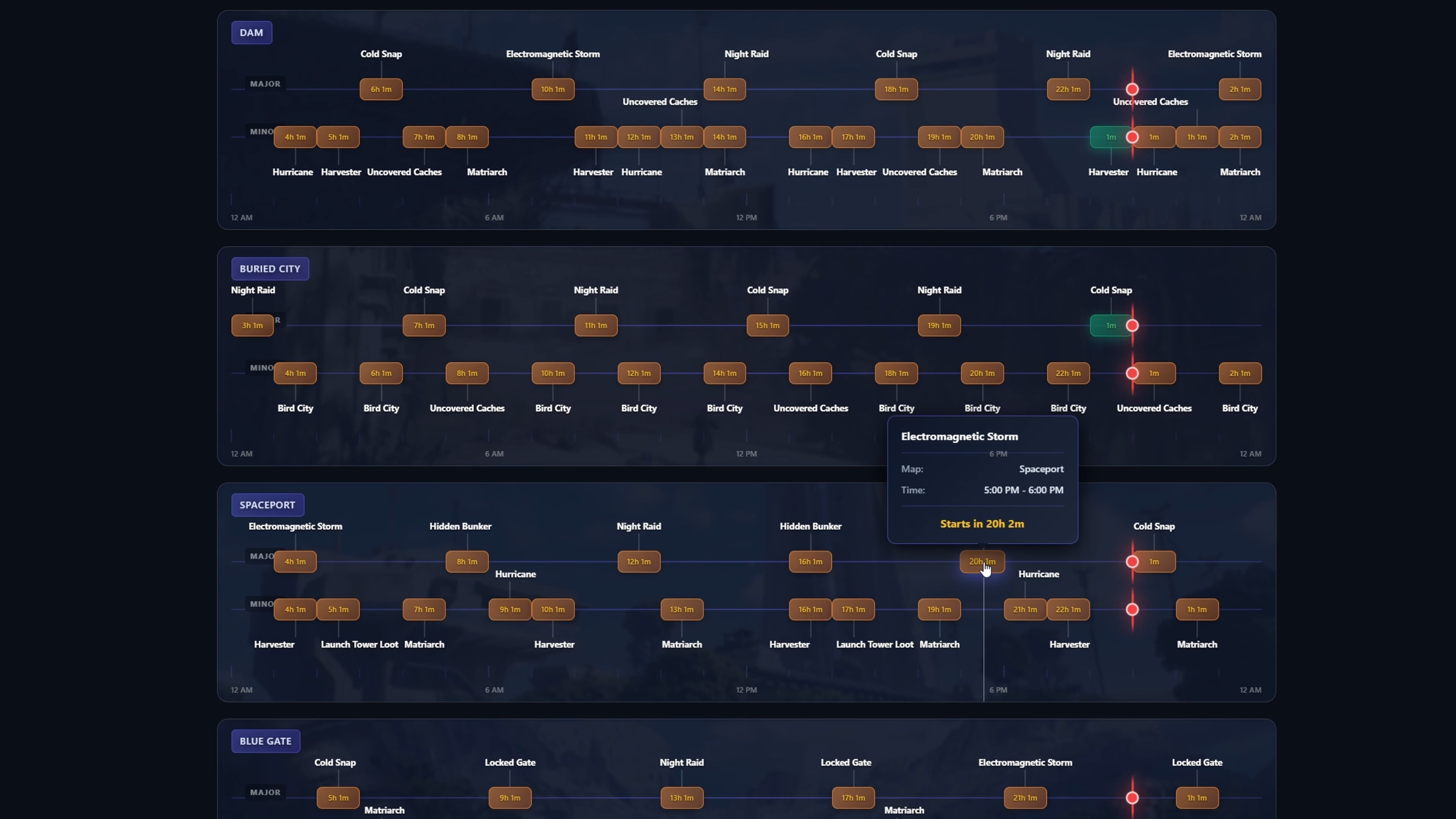
Event timers as shown on the https://arcraidershub.com/events website.
But, the timers for those map conditions are global, around the world. Which means if you are in an America timezone, you had to wake up at 3 o’clock every night just to be able to have a chance at a max probes score. These event timings change every week, but in the final trials week that was the only time, once a day, where the electrostorm event was active on the spaceport map: 3 o’clock in the morning.
If you have ever played World of Warcraft, imagine it’s like Warsong Gulch is only active for 1 hour during the day, between 3am and 4am. It’s pretty maddening for those America players, and I felt awful for them.
But wait, there’s more!
Which probes spawn in the map is random every time. The max score found is 76000, but sometimes there are not enough spawns to get a 76000 score, and they only spawn enough for a 71000 score, which you will have no idea about until you have already ran around for 20 minutes. Also, some probes can bug out spawn underneath the terrain, where you literally cannot grab them, and you won’t find out this is the case until well into a lobby, and then you have to reset and hope you get another good lobby. This reset time eats into the one hour you have every day just to try and get a score.
But wait, there’s more!
There are some special map conditions, like hidden bunker and locked gate, that have 40 minute timers instead of 30. You get an extra 10 minutes, which counts for a lot. But this also means everyone will try to do these trials on those maps, so it becomes much harder to find a match where only your team can get a max score.
And you have to gather the right items to do these trials. For example for the rocketeer trial and the queen trial the best way to do them is by using Wolfpacks, which are incredibly good grenades that kill ARC very fast. The material to craft these takes a lot of time and effort to gather.
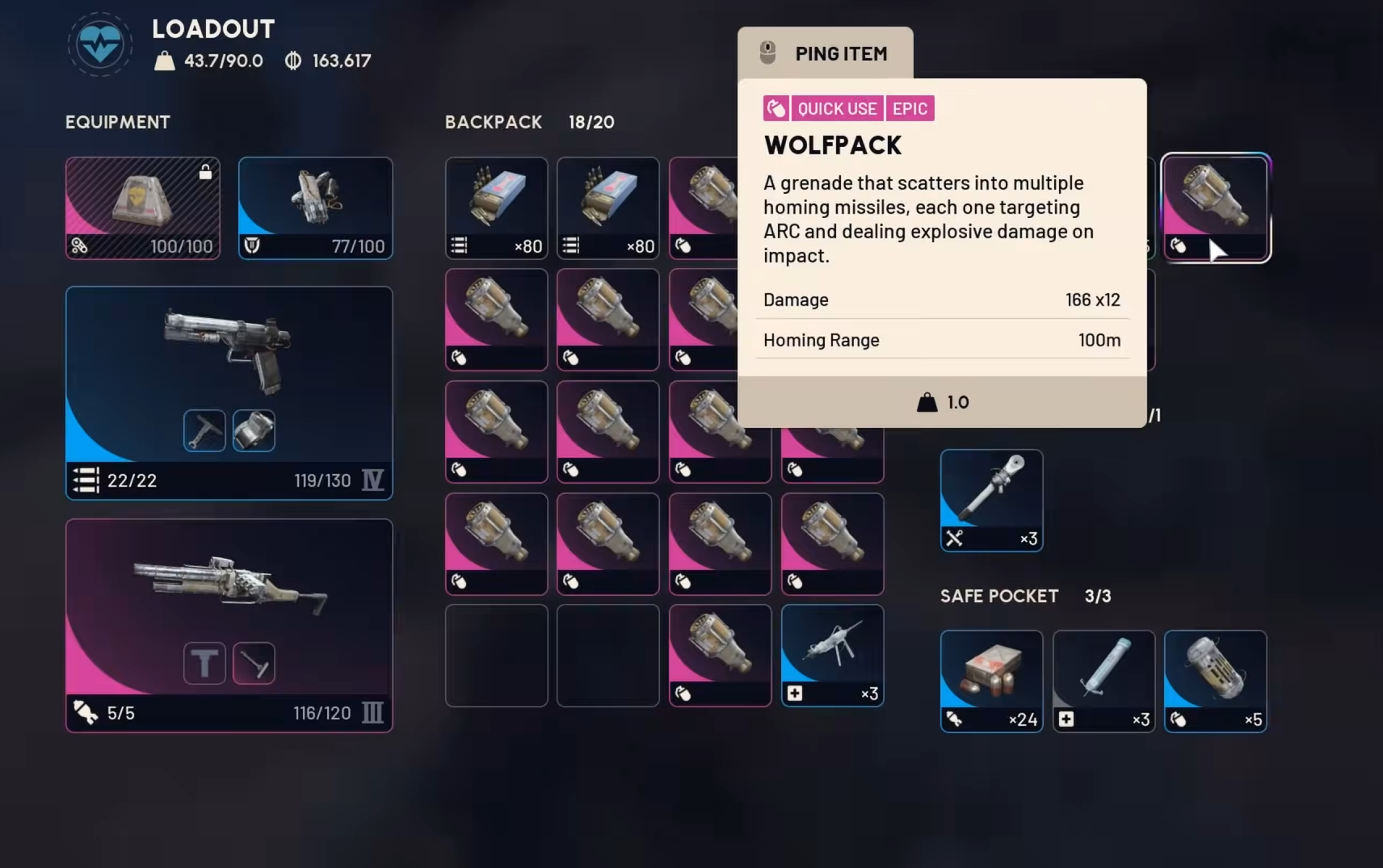
My inventory full of wolfpacks, when trying to do a trial that makes them fastest
Two of the most time intensive trials this season have been ‘Snowball ARC’ and ‘Damage Wasps’. Both of these require items that cannot be crafted, and have to be manually gathered. For example in the snowball ARC trials they require you to gather snowballs first. You need to use one lobby just gathering enough snowballs to fill your inventory to even attempt the trial.
For the Damage Wasps trial, you can shoot all the wasps that naturally spawn in the game, but there is an item in the game called a Snitch Scanner. If you kill a snitch ARC, it drops a single Snitch Scanner. If you throw this Snitch Scanner, it spawns two wasps.
So, what is the best way to do the damage wasps trial? You gather a massive load of snitch scanners, then you go into a 40 minute map, and then throw them and kill them as they spawn. And if you die, or something goes wrong, you have to gather them again.
Or maybe you have to defend yourself as you leave, you down someone to do so, and now your heat is up. So you have to do some heat resetting and surrender 6 times before you can get friendly lobbies again. But that may lose you the time to be able to do the matches as the event may be over. I hope you are starting to see how all these systems interact with each other.
Tallying it up
So, to get a high enough score for the top leaderboards, I needed to:
Gather all the necessary equipment, surrender 6 times to lower my PvP chances, hope I spawn in at 30 minutes, hope I spawn in at a good location, hope I have a good exit location, hope I have sunny weather, split up as a team yet do not die, hope the objectives spawned enough, do it only during one hour in the day, hope none of the objectives bug out and spawn outside of reach, and if I do have to reset I have to hope it does not take up the whole hour during which the max score trial is possible.
It's a lot. It's a big compounding of several random chances, after which a high skill threshold can then be achieved in the trial itself, and if that fails, it’s back to random chance to get another try.
But wait, there’s more!
The way the leaderboards work, there are 100 people on each leaderboard. You get placed on a leaderboard after you have achieved any score at all during the week, so even accidental damage on an ARC enemy can give you a score, and place you on a leaderboard. This means if you play on Monday, when the board & trials reset, you get on a board with other people who play on Monday. And you have to hit a high score in comparison to the others on the leaderboard to make sure you advance to the next tier.
So, if you only play on Saturday and Sunday, at the end of the week, you usually get on a leaderboard with folks who also only play on those days. They have less chances for a higher score. So it is much easier to get a higher score, and promote, if you do not play the whole week.
So, the fastest way to rank up is by not playing the game.
This reminds me of back in the day with World of Warcraft, where you would get World Buffs from Onyxia, Nefarian, and Zul’Gurub. These powerful buffs would have ticking timers on them for 2 hours. So players would immediately log off to make sure the timers stopped. They could not play the game. Then they would log on during a raid, and be able to use the buffs during the hours long raid. Thankfully Blizzard noticed this problem for the Classic re-release, and made an item that allows you to save the buffs into it, called a boon, so you can still play without using or losing the buffs. I think this also showcases how these game design problems have existed for a long time.
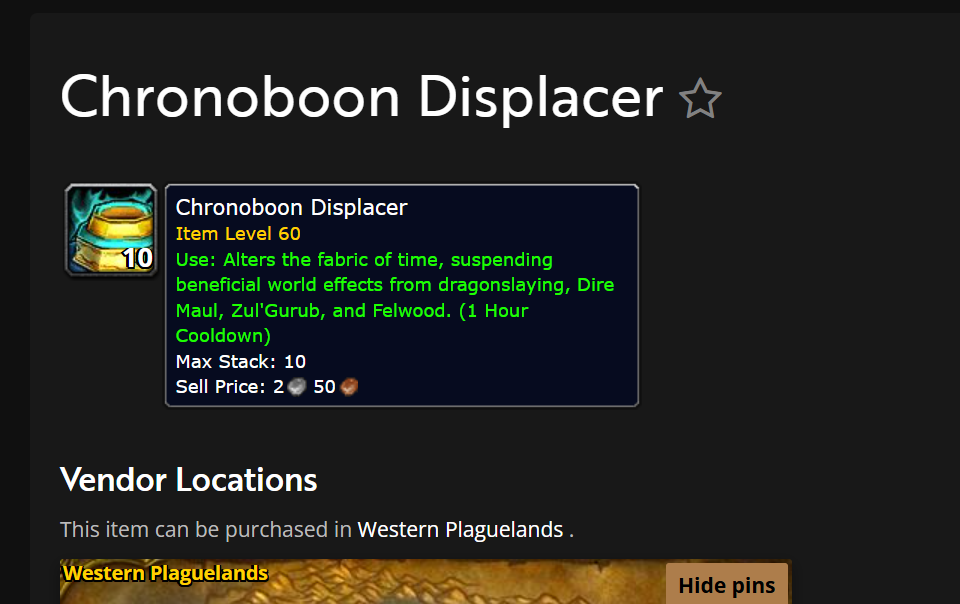
The Chronoboon Displacer, from Wowhead: https://www.wowhead.com/classic/item=184937/chronoboon-displacer
For the higher ranks in ARC Raiders, like Hotshot and Cantina Legend, this leaderboard issue does not matter anymore, and you can play all week whenever you want. The Cantina Legend is the top 1000 players in the world, and it is one huge list. While Hotshot’s scores are combined with the cantina legend scores at the end of a trials week, and the top 1000 players of that big list become cantina legend rank.
But, in the hotshot and cantina legend ranks you cannot actually see everyone who is fighting for cantina legend rank, so you have no idea if your score is good enough. It got to the point where people are so afraid of losing their hard earned rank that someone in the community, called Hatemail, graphed out all the data on hotshot and cantina legend leaderboards, to put folks at ease about their chances of making it into Cantina Legend in the final week.
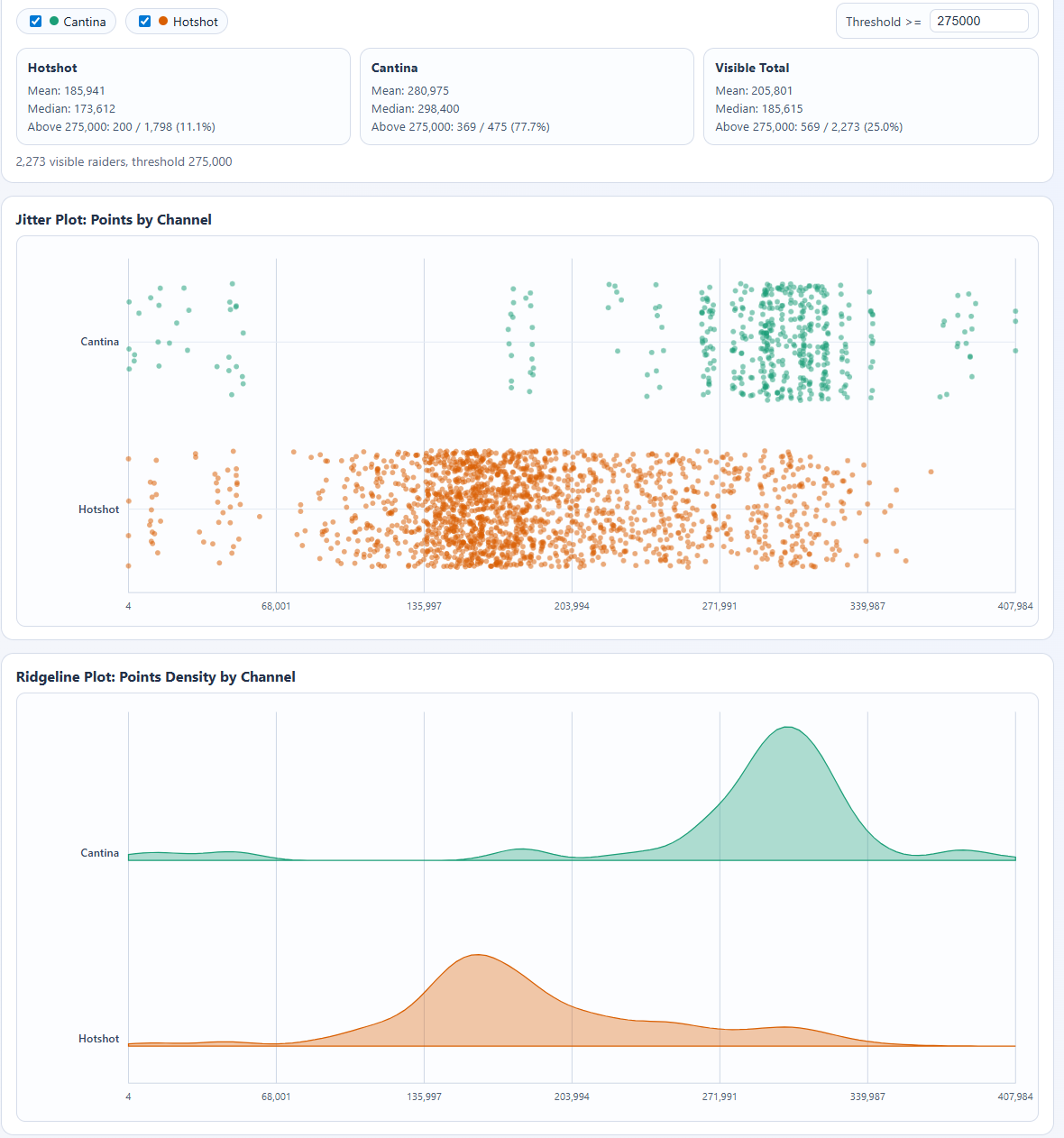
The data that Hatemail gathered about the Hotshot and Cantina Legend leaderboards
But wait, there’s more!
Updates to the game usually happen on Tuesday, but the trials start on Monday. It has happened before that folks who did major trial runs, with very high scores on Monday, that were then physically not repeatable the rest of the week due to an update that changed the game on Tuesday.
For example, on the 27th of January there was an update for Lighting on Stella Montis, which made the entire map much darker during night time, which is when you have to do trials there due to the event. So everyone on Monday had clear vision in the map, but everyone the rest of the week had to play in very dark conditions, making it much more difficult.
And on the 24th of February, the day before the final trials ended, there was a huge update changing the balance of many weapons, items, and even loot, like for example changing the wolfpack crafting requirements to be even more difficult to craft. While players still had 24 hours left to do trials, and they were still preparing to change their scores.
World of Warcraft solved this problem long ago, by doing their honor wipes, raid resets, and updates always on the exact same day and time, so that nobody would get an unfair advantage.
So, considering all of this, and there is more I haven’t even gone into, who would be crazy enough to try and get to Cantina Legend?
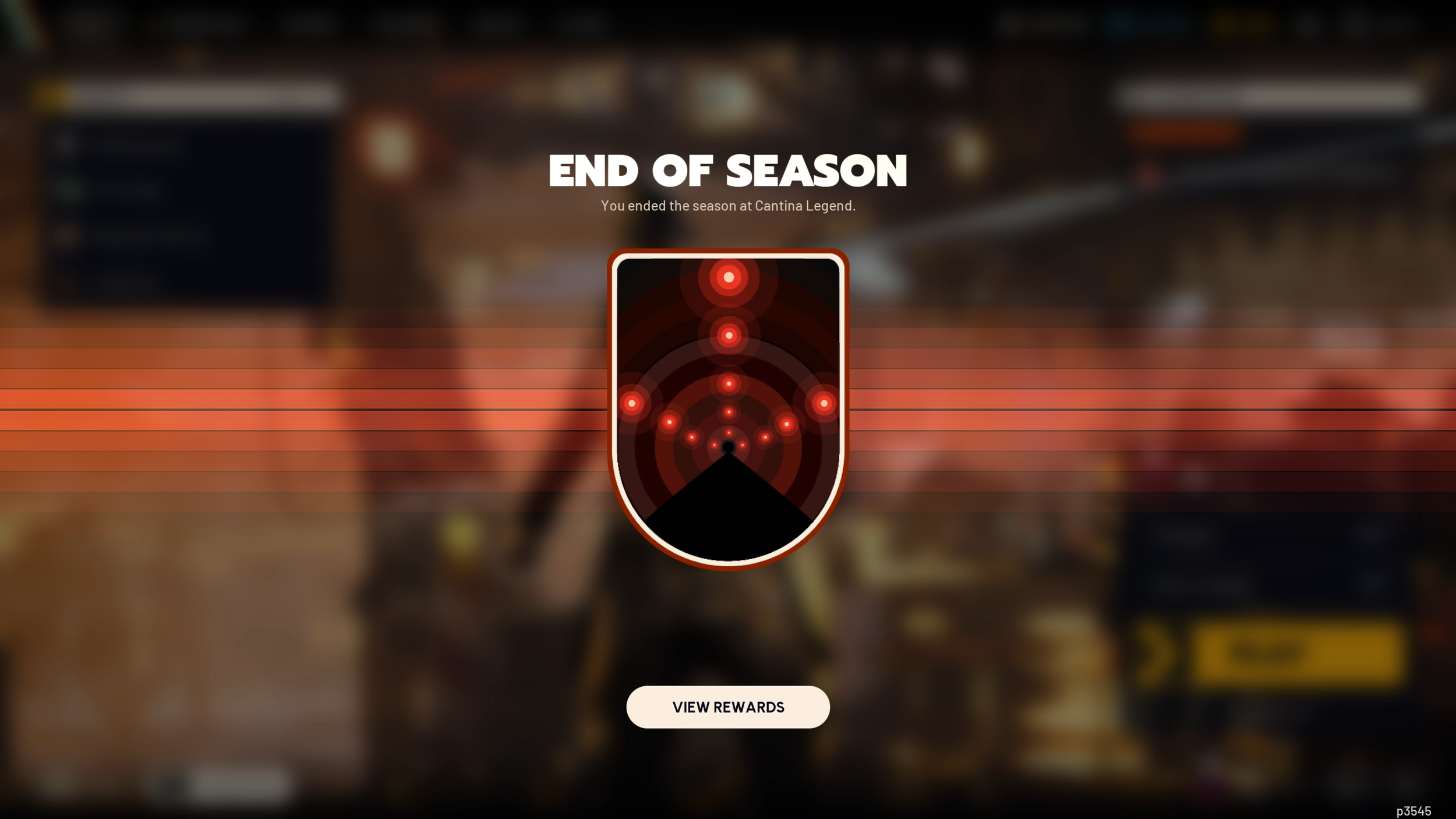
Myself achieving the Cantina Legend rank at the end of the season.
I am a legend.
This experience reminds me of Soren Johnson saying: “Given the opportunity, players will optimize the fun out of a game.”. The opportunity is definitely given to players here, considering all the game mechanics involved.
But, the gameplay and gunplay is also so much fun! When you do get a great score, and overcome all odds, t’s fantastic. The teamwork, it feels awesome. The trial community is also great, where folks look for groups, and even made maps for trial objectives!
Like this one of the probe locations on the spaceport electro map.
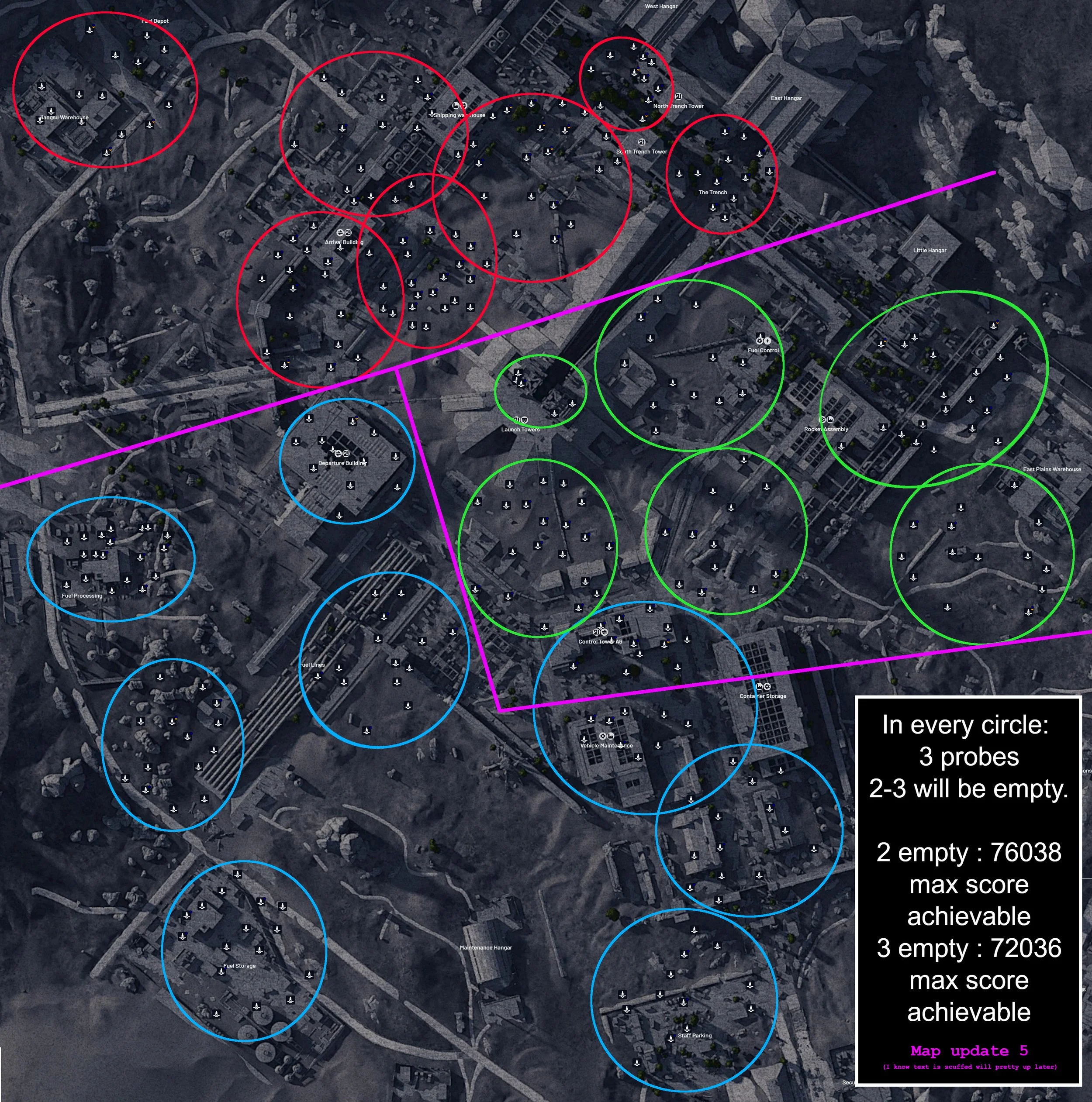
A probes map of spaceport, electro, made by the community
Or this one of Shredders routes:
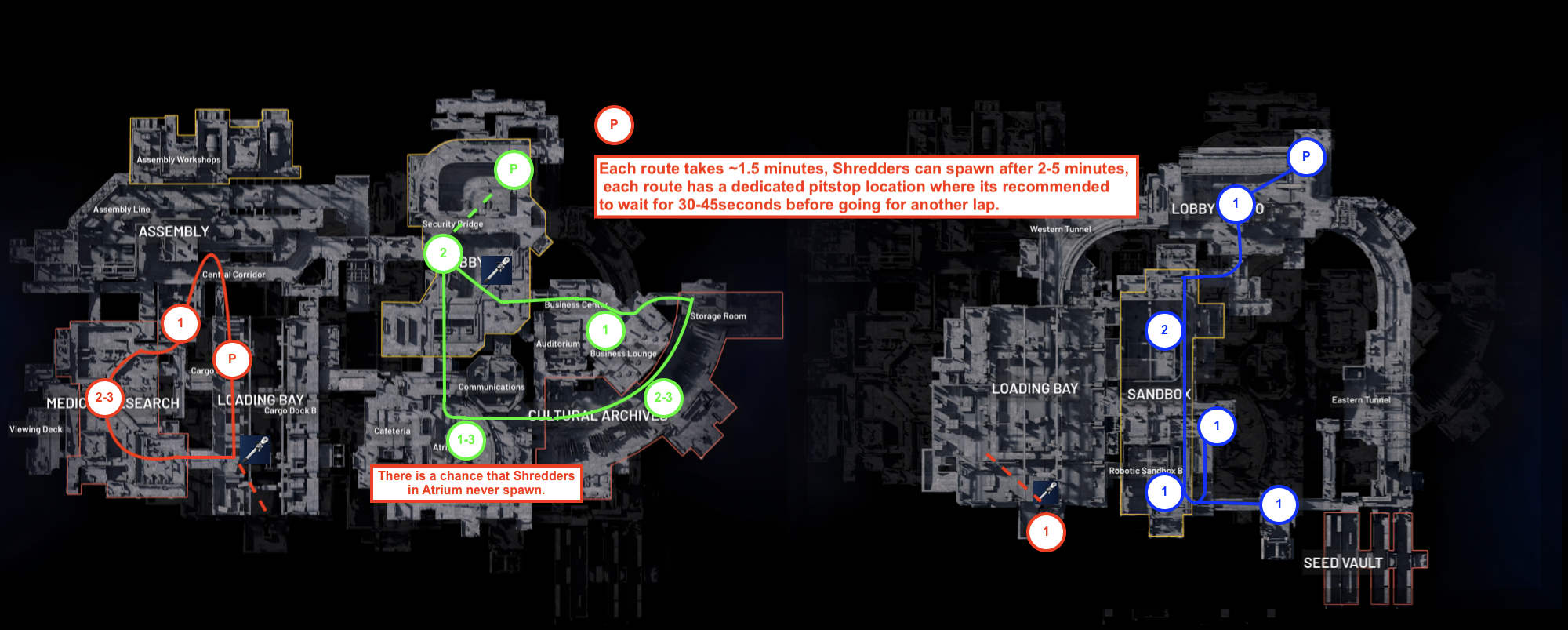
The Shredder map for Stella Montis, built by the community
These were both built by a group of people as they try to figure out how the systems of the game work to get the best score. It’s like the speedrunning community, where people share their valuable intel to help everyone else.
People even started hosting an interactive map service to mark down in-game locations that have probes, husks, plants, anything that can help everyone else. Look at the huge list of options in the side panel menu, and all the helpful maps in the dropdown that show what can be found where.
But, with all the metagaming possible, everyone tries to get to the extremes. Remember how I mentioned you need to bring in lots of snitch scanners, snowballs, and watch out for PvP? Some folks, and I do not condone this and never did this myself, started playing with 21 man teams. You can technically only play with 3 people total, but they had 21 people all sit in Discord at the same time, queue at the same time, and then basically own an entire lobby.
One team then does the trial, and all the other ones sit around and wait. Or, the other teams even drop them more snowballs, more snitch scanners, to get absurdly large scores that would never be possible in a legitimate trio. This is so overpowered that the top team who did this got a 407k total score in the last week. Even they themselves didn’t like doing this, and they changed their names in the leaderboard to EMBARK_PLEASE REWORK TRIALS_SYSTEM to get their attention.
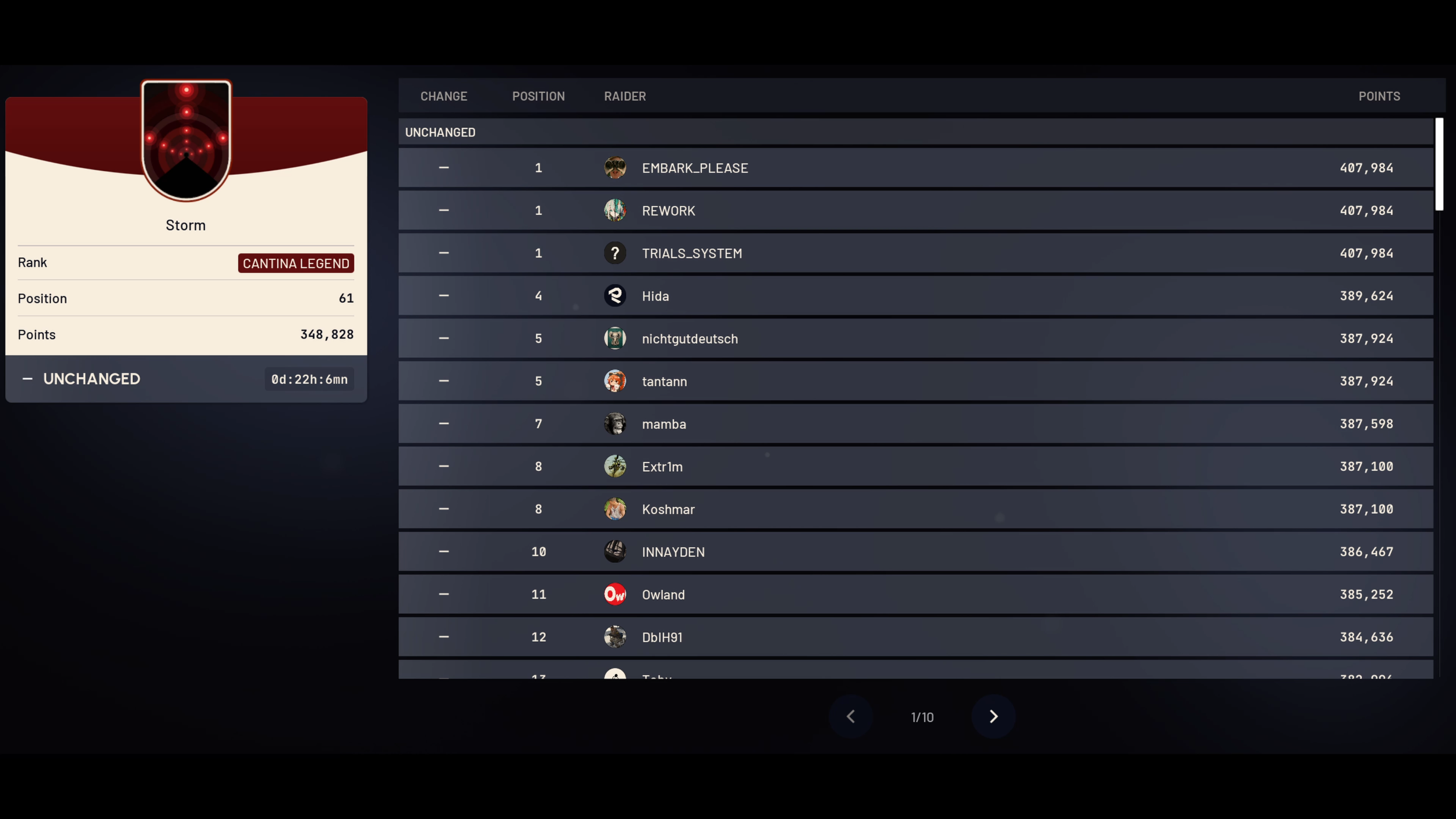
The final leaderboard with the names of the top scorers spelling out the sentence EMBARK_PLEASE REWORK TRIALS_SYSTEM
Again, players will optimise the fun out of a game, given the opportunity.
Some great examples of this are folks trying to find out the best way to play the game, and making up mythologies of the internal logic to see how they can get higher scores.
For example: Closing the doors of rooms to make enemies spawn faster. Nobody knows if this works, but they feel it works, and so they will do it. Like you would hold the A button in Pokémon to have a better chance at successfully catching. It did nothing, but it felt good, and there is nothing you can do otherwise, so you did it.
Also, sometimes ARC can spawn while you look at them with a big great black plume of smoke, but, sometimes they spawn in silently. Players have no idea why it does either one, so they just do anything they can to make spawns happen. Of course players would try to guess how systems work! They are incentivized to develop theology from first principles!
If the incentive to the player is to get as high a score as possible, some will do anything they can do. Tom Francis made a great point about this in the past, where he said: “Whatever you reward, some players will feel forced to do it. The tiny XP payout for hacking in Deus Ex 3 killed the game for this person.” and he linked to a reddit comment about how a player felt obligated to hack every small device in the game, which made it very boring for them, but the game mechanics incentivized that behavior.
And I understand as a game developer myself that game development is tough. QA particularly. Months of QA work by a team of 12 means thousands of hours of QA. But, if on day one of your game going live you get millions of players, that means they will get millions of hours of gameplay in just a day! They will find crazy things that a QA team could never find in years.
Similarly, when it comes to game design issues, players will react in ways you cannot fully predict at huge multi million player count scales. It is really hard work: If there was a perfect way to design games, then everyone would be doing that all the time and all games would be successful, which they are not. But, you do have to prepare for game design issues to come up! Especially in live service games. Hopefully only 5 minutes into this article you realized some of the incentive structures in the game design of these trials in relation to the rest of the game, did not fit together well.
As a game developer, you do this too
And, this is not just the case for game players, it also goes for game developers. Like on Steam! Game developers want to get to the top of the steam charts to get the most sales. And Valve releases videos talking about how the Steam algorithm works to get to the top of the charts. But, they do not actually publish the source code of the system, which means game developers will forever keep guessing, and making mythology, about how the system works.
For example: Some folks guessed that wishlists were the most important to rank high in the Steam algorithm, but then later other folks mentioned you should actually get potential players on a Discord community first, and then when you have thousands of them there, make them all wishlist at the same time, which would apparently make the algorithm serve your game more because it sees it as a giant boost. Which is true? Nobody knows! Whoever is successful will just push their narrative as the right one for the system. Just keep pressing A to try and catch your Pokémon.
Players will always see the systems from a players perspective. In the end it is us as game developers who are responsible for setting up the incentives for players. And by not being clear to players about how to achieve the result they want, they will create mythology around your game which can sometimes be much worse for all the other players.
Deadlock is a good example of how to prevent this, because if you press Tab, you get to see exactly what items the enemy team has bought. You could technically find this out manually, but it would be very annoying and time consuming work, not fun, so they remove that boring manual work by being instantly clear about the system.
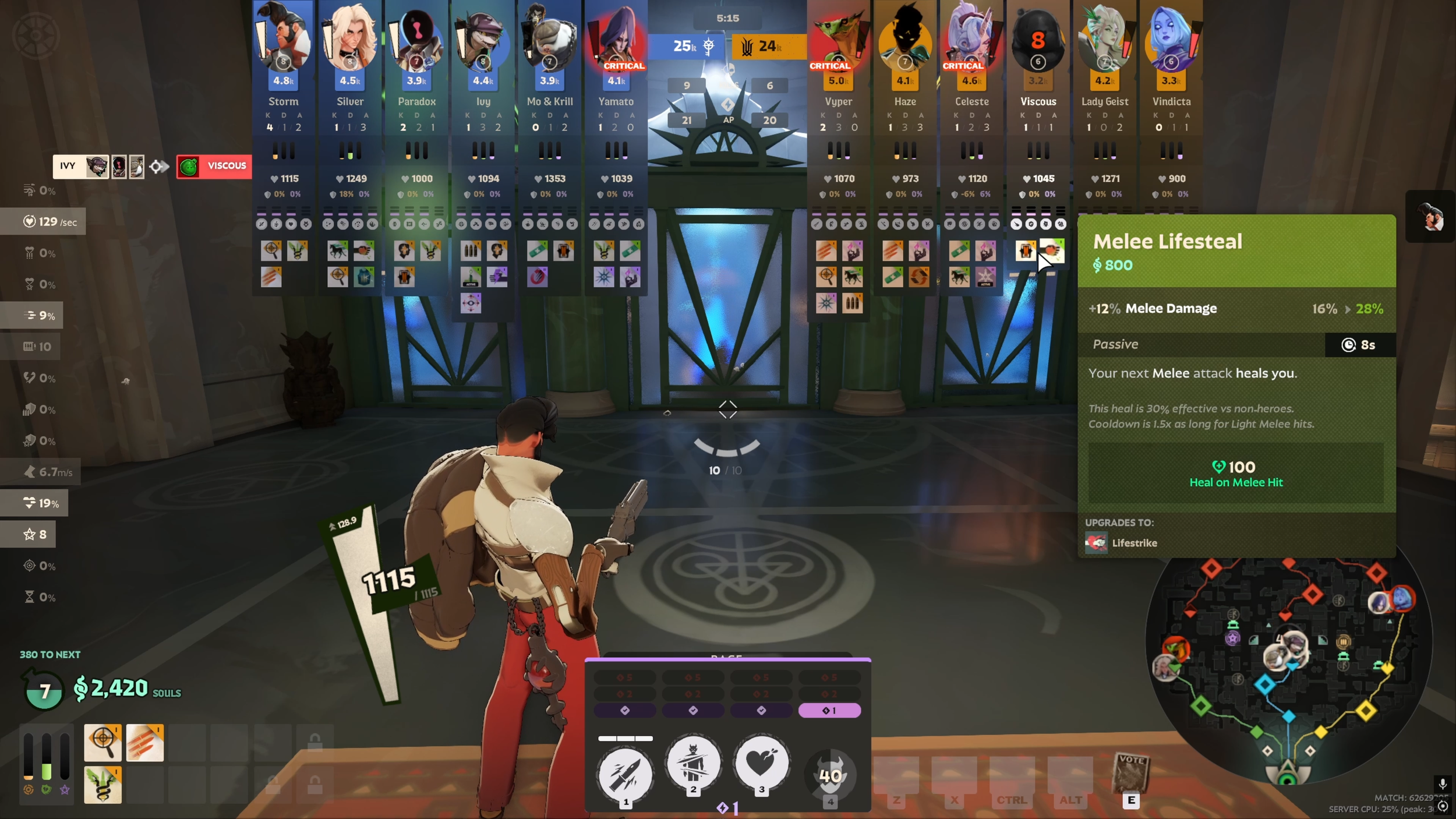
A screenshot of Deadlock, showing myself looking at the items the enemy team has.
Now you may think that only a few people go for these max trial scores, and that's true, but by doing so they affect the gameplay, economy, and experience of many others. By the system incentivizing just a few people to go to extremes, everyone else is affected.
This is not just a problem in videogames. Systems are everywhere in society. People keep asking others to behave in certain ways, but you can't. You have to change the incentives, so that people change their behavior by themselves. Otherwise a small group of people will ruin it for many others. Because they are incentivized to do so. As Charlie Munger once said: “Show me the incentives, and I’ll show you the outcomes.”.
Thanks to today’s technology, you can quickly see these connections. There is a great book about this called Thinking in Systems, by Donella H Meadows, and it goes into way more detail on this topic. Whatever the system incentives, that is what will happen, even if it does not make intuitive sense for the system to do so. That is what makes systems design so hard.
Which is why I think it would be better if games were more transparent about their internal mechanics. How does the ranking system work? Show the data. How do the spawns work? Be clear about the mechanics. In the end the entirety of the game's development determines the user experience, which is also a core tenet of user experience design: The holistic design. If someone tries to push a door which they should have pulled, they may feel stupid for doing so, but it is the design of the door which is at fault. The user is not at fault.
You have to listen to these complaints of people saying systems are unclear. You should not just do what they suggest as a fix, but you should absolutely listen to complaints, because behind the complaints are legitimate experiential issues. The best example I have ever heard of this is from Wolfenstein Enemy Territory, in a video by People Make Games, where players complained that one gun was better than another, even though in the data they were shown to have the exact same stats:
“They're identical, they're absolutely the same damage, rate of fire, reload speed, clip size. Absolutely the same. The players are wrong. This is bad feedback. And then we look at the server data, and players are getting more kills with the Thompson than the MP40. The players are right. How? What's going on here? And the one thing we trace it to is the Thompson had basier audio. It just sounded more powerful. So players felt more powerful. They felt more confident with it. They went for more head shots, they got more head shots, they got more kills, the players were right. So the fix for it was to change the audio, not the weapon. We just put less basey audio on it and they felt more similar. And that ‘solved’ the ‘problem’.”
I heard a similar story about a MOBA where in the patch notes they said they had nerfed a hero, and that Hero’s win rate actually went down after that patch… but they had forgotten to include the actual changes in the patch. The winrate went down because players thought it had been nerfed, even though it hadn’t! The information we give about a system matters just as much as the system itself! This is why open source development is also so powerful, as just like with a game, you get millions of people checking out your systems, instead of only an internal QA team.
In the end, the purpose of a system is what it does, not what you intended it to do. If your system incentives some of your players in a way that negatively affects the experience of many others, then that is a fault of the system. Whether you think that is a problem, of course depends on your intent with the game.
Because folks kept asking me: I think a potential fix here is to make the trials a particular category of queue. For example, to queue in for a trial, which puts you at the same exact spawn, with the same exact exit, always at 30 minutes remaining, always with the same enemy spawns, and zero loot from any containers or ARC, and no other squads present at all. With the requirement that you still bring your own gear. That way it truly becomes a feature of skill, instead of RNG and teaming. Essentially a speedrun that can be optimized perfectly.
I think that would make trials an exciting feat of skill. But! I am saying that as a player of the game. So I am probably wrong about this, just like I mentioned above.
We should listen to users, and interpret
This section is something I did not put in the video, for fear of backlash to others, but it is something that I think we as game developers should acknowledge and discuss: When we say players do not know what they want, we are wrong. They may not phrase their feedback correctly, they may have no idea how to discuss what they are actually looking for, and they cannot articulate the intricacies of the systems in ways that professional designers can, but they are able to feel something is wrong. It is on us as designers to then interpret their feedback, find out what the underlying problem is, ask why 5 times, and judo that into a solution which solves the underlying problem. That is classic UX design, and the entire process starts with at least listening to what users say. Listening does not mean directly implementing their feedback. It means listening to what they say, or reading what they say, and then making decisions ourselves that fit to the intended experience we are trying to create. So, if they are your target audience, or not, which is your own decision to make. But, players do know what they want and do not want, they simply do not know how to phrase that feedback, which is fair.
For extreme clarity, just to be sure I do not get misinterpreted, let me be explicit: By ‘What they want’, I mean what experience the user would like to have. There are other misconceptions about this, and the best way I have seen that misconception phrased is by Nicole Gransitzki: “It's schrödinger's user. They know what they want (emotionally/experience level) and they don't know what they want (practically/in terms of implementation)'“. In this case when I am discussing ‘What they want’, I mean that emotional/experience part, and users do know what they want there. The practical and implementation side is of course entirely ours as designers, but that does not mean we should ignore what users want from an emotional/experience point of view. You certainly are allowed to, and are able to if you would like to as an auteur, but it usually results in products that cannot find an audience.
Similarly, a worrying trend that I have seen over the last few years is folks saying: “To avoid listening to a vocal minority, we’re only going to trust our data”, which is a classic McNamara fallacy. Being fully data driven is just data driving yourself off a cliff. This is why I included the Wolfenstein Enemy Territory example above: We have to listen to what users say, and look at data, and interpret. All are necessary. Nothing exists in a vacuum, it’s all holistic.
To grab an example: When a player says ‘Just move your game’s engine to Unreal!’ we all know as game developers that this is an insane thing to mean outright if you have already built your game in a different engine, but players do not know any better. They do not have the knowledge to clearly communicate their feedback us. Instead, it sounds like there may be deeper issues behind that statement, which could be important to look at. Maybe they are to do with performance, maybe they are missing accessibility features because their custom controller only works with Unreal, or maybe they think there is something wrong with the art style and they have seen games made with Unreal that they personally think look better. Or, maybe they’re just trolling. If you see feedback once, it can be an outlying data point without importance, but if you keep seeing the same feedback again and again, then it’s time to dig into that and find out what is really causing that feedback. Maybe players simply misunderstand, or is there something that genuinely needs fixing? That’s why user research is so important!
I feel that the quote 'You think you do, but you don't' is a good example of how taking feedback and spinning it too far from player intent is a bad thing, especially due to the massive success of classic WoW later on. Players did know what they wanted, but their feedback had to be interpreted into solutions (such as the world buff boon) to make their experience better. Again, players know what they want, they just have no great way of phrasing that to us. By interpreting, and staying close enough to their feedback, we can deliver something much better than totally ignoring them or telling them they are wrong for giving their feedback. Shutting folks down for giving feedback is a giant red flag in user experience design anyway, as it usually means those users will never give feedback to you ever again, which will limit your iteration speed and quality.
We have had this discussion a few times in the game industry the last few years, particularly about MMR (Matchmaking rating). Some players kept complaining about SBMM (Skill Based Match Making) and other matchmaking systems. Then some developers kept saying that those players just wanted to win all the time, and that this must be the only reason they dislike SBMM. But no, it turns out the Elo rating system is not a great fit for games. Which is not a surprise, because it was invented for chess! So another developer, Charlie Olson, built his own MMR and ranking system improvement, and players are happier with it: https://www.invokation.games/. Through this example we again see that listening to your users, not discrediting them, but listening and interpreting what really is the underlying problem, and finding solutions to those underlying problems, is a good thing. By the way, Embark is using that Invokation MMR and ranking solution, for The Finals!
Another argument I have often heard is that some folks think that hiding systems from users is a good thing. For example: When a pedestrian wants to make a traffic light turn green, sometimes the button is real and activates a timer, but sometimes it is fake to just give the user the feeling of having done something. That definitely can feel better than having no button at all, so it technically works and makes people happy. That’s good. But, making the system completely transparent, by having a visible timer that slowly ticks down to when it turns green, will always be better. It will show the user exactly how the system works, how long it takes, and whether they even need to press a button. If the timer is automatic and always works, there is no more need to have a button at all. Transparency of the system wins out!

A pedestrian traffic light with a timer. Photo by Eric Mclean https://www.pexels.com/photo/traffic-light-turned-on-14046238/
Lastly, especially in the case of Valve going to conferences to explain to game developers how the Steam store and its recommendation algorithm work: If you try to explain a system, and you are the creator of that system, then you will always sound defensive no matter what you say. Even if you are trying to explain the system in good faith, you will sound and feel defensive, because you are the creator of the system. This is a shame, but it is the reality we are in. If your audience cannot take a look at the system themselves, then they will always second guess how it works. Especially if there is huge incentive to make sure it is correct, like the difference between millions of sales on Steam, or hundreds of sales on Steam.
Should the trials change?
So, were Shroud and CohhCarnage right in their criticism of the game design of trials in ARC Raiders? Yes, I would say so. Having gone through the trials myself, I can see where their frustration comes from.
Though at the same time, I had an amazing time with a community, breaking down mechanics and helping each other, as well as having exhilarating runs of great gameplay together. I had lots of frustration with the RNG, and I think some of the game design incentives set people up to create a frustrating experience for themselves, creates mythology based on hearsay, and a worse game experience for the folks around it.
I think by exposing how systems work we can more easily see the gaps in our own logic as game developers, we can prevent frustration from players, and we can provide a magic circle where we can all clearly see the edges of where it starts, and where it ends.
Update, 29-03-2026
A few folks linked me to Ion Hazzikostas' talk from Digital Dragons after they read this article , and I agree that it is very relatable. Specifically at 17:38 he goes into great points, which align to my point that a system does what it does, regardless of what your intention was: https://youtu.be/v_8Jw8beghc?t=1058
Specifically, he says: "Players are playing the game you made, not the game you wish you made.". I highly recommend watching his talk!
Thank you, please subscribe
Thank you very much! You can subscribe to see more articles in the future, and follow me on LinkedIn, Bluesky and Mastodon.
Special thanks to Nicole, and thanks to Brenden, Bertine, Kris, Andre, Surrenic and Arvy, for their feedback.